News & Analysis
Book Review: Achieving Climate Justice for Development
Published
3 years agoon
By James Njuguna, LL.M (Advocate), Lecturer of Law at University of Embu Faculty of Law.
The idea of Climate Justice is significant for the entire world since it seeks to achieve an agenda that links the struggle for a prosperous safe future for all with a fight against inequalities and exclusion. The book “Achieving Climate Justice for Development” is informed by the need to achieve climate justice as a prerequisite for sustainable development. It explores the idea of climate justice and discusses the efficacy of the measures adopted towards achieving climate justice for development. The book not only adds to the already existing debates in this area but also offers solutions for achieving climate justice for development. The discussion also explores the global and regional approaches to achieving climate justice for development. This book is aimed at the students, general practitioners, researchers, decision-makers and academics, among others, interested in keeping themselves updated in the study and practice Climate Justice for Development. This book is a companion to the compilation of peer-reviewed articles and published book chapters by Dr. Kariuki Muigua, PhD titled “Combating Climate Change for Sustainability.”
The author of the book, Dr. Kariuki Muigua, PhD is the Africa’s leading Environmental Lawyer, Environmental, Social and Governance Scholar, Climate Change Expert and leading Alternative Dispute Resolution, Conflict Management and Climate Justice Guru. Dr. Kariuki Muigua is Senior Advocate of Kenya, a Chartered Arbitrator, Kenya’s ADR Practitioner of the Year 2021 (Nairobi Legal Awards), ADR Lifetime Achievement Award 2021 (CIArb Kenya), African Arbitrator of the Year 2022 (Africa Arbitration Awards) and Africa ADR Practitioner of the Year 2022 (African Arbitration Association), Member of Permanent Court of Arbitration nominated by Republic of Kenya and Member of National Environment Tribunal (NET). Dr. Kariuki Muigua is a foremost Environmental Law and Natural Resources Lawyer and Scholar, Sustainable Development Advocate and Conflict Management Expert in Kenya. Dr. Kariuki Muigua is a Senior Lecturer of Environmental Law and Dispute resolution at the University of Nairobi School of Law and The Center for Advanced Studies in Environmental Law and Policy (CASELAP).
Chapter One offers an introduction to climate change and climate justice. The author notes that Climate change mitigation has taken centre stage in many development plans and activities around the world due to the disastrous effects that climate change has had not only on economies but also on people’s livelihoods. He adds that Kenya has not been left behind, either in mitigation measures or in suffering the effects of this change. It has been acknowledged that if the world is to achieve the United Nations 2030 Agenda for Sustainable Development Goals, then much more needs to be done in a coordinated way that not only focuses on all sectors of the economy but also brings all stakeholders on board. Hence, the book adds to the existing literature on this topic with a focus on Kenya and its diverse topics are useful not only to environmental law researchers and students but also to policymakers in their efforts towards mitigating climate change and building a climate resilient economy for the current and future generations.
Chapter Two discusses Climate Change and Sustainability and underscores that achieving environmental sustainability has become a pertinent concern in the wake of global environmental challenges. These problems include global warming, loss of biodiversity, pollution, deforestation, ocean acidification, food and water insecurity, soil degradation and depletion of natural resources through overfishing, unsustainable mining among others. According to the author, these environmental problems have been worsened by the threat of climate change which is the most defining challenge of our time. The impacts of climate change such as warmer temperatures, intense droughts, water scarcity, severe wild fires, rising sea levels, flooding, melting polar ice, catastrophic storms and declining biodiversity are being witnessed across the world. These environmental problems, including climate change affect environmental sustainability by affecting natural ecosystems as evidenced by loss of biodiversity and depletion of natural resources.
Chapter Three deals with the legal and institutional framework on Climate Justice in Kenya. The concept of Climate Justice has emerged to deal with the justice concerns brought about by climate change. Climate Justice seeks to address the causes and impacts of climate change in a manner that recognizes and fosters the rights and concerns of vulnerable people, communities and countries. The chapter seeks to critically discuss the legal and institutional framework necessary for promoting Climate Justice in Kenya. It is worth pointing out that responding to climate change requires involvement of all stakeholders. Further, the chapter conceptualizes Climate Justice and analyzes its enabling legal framework at the global, regional and national levels.
Chapter Four addresses entrenching Gender in Climate Change Mitigation and Adaptation. The United Nations 2030 Agenda for Sustainable Development envisages a world of universal respect for human rights and human dignity, the rule of law, justice, equality, and non-discrimination, among others. This calls for the concerted efforts of all players if all this is to be achieved. The Sustainable Development Goals (SDGs) is a set of 17 Sustainable Development Goals and 169 targets that seek to build on the Millennium Development Goals to realize the human rights of all and to achieve gender equality and the empowerment of all women and girls, and are integrated and indivisible and balance the three dimensions of sustainable development: the economic, social and environmental.
Chapter Five deals with Climate Justice and Environmental Conflicts. Over the years, there has been an appreciation of the impact that climate may have in economic results, as well as rising public concern about climate change. The term “climate” refers to observations of climatic factors such as temperature, rainfall, and water availability, as well as climate indices that serve as proxy measures for these variables. While climatic circumstances do not generate conflict on their own, they can modify the environment under which particular social interactions take place, potentially altering the risk of conflict. The environmental principle of polluter pays, which holds that polluters should be held accountable for destroying the environment, justifies the concept of resolving climate change disputes through restorative dispute management approaches. The chapter critically discusses the place of Climate Change in the rise and trends in environmental conflicts.
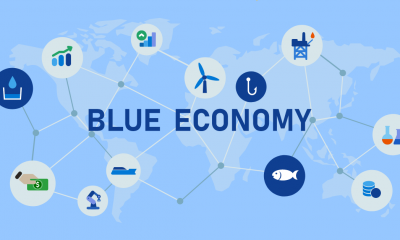
Chapter Six of the book deals with tapping into Africa’s Blue Economy: Challenges and Promises. Blue Economy is defined as a ‘sustainable ocean-based economic model that is largely dependent on coastal and marine ecosystems and resources, but one that employs environmentally-sound and innovative infrastructure, technologies and practices, including institutional and financing arrangements, for meeting the goals. The chapter critically discusses the concept of blue economy in Africa. It explores the problems and promises of Blue Economy in Africa. The chapter further recommends the way forward towards fostering Africa’s Blue Economy for Sustainable Development.
Chapter Seven is about embracing Green Economy for Climate Change Mitigation. The author notes that during the Africa Climate Summit, held in Nairobi, Kenya, from 4th to 6th September 2023, African Heads of State and Government committed to advance green industrialization across the Continent by prioritizing energy-intense industries to trigger a virtuous cycle of renewable energy deployment and economic activity, with a special emphasis on adding value to Africa’s natural endowments. The chapter critically examines actualization of Africa’s green dream. It explores the progress made towards greening economies in Africa. The chapter further discusses opportunities and challenges facing the attainment of green growth in Africa. It also suggests recommendations towards actualizing Africa’s green dream for Sustainable Development.
Chapter Eight discusses the concept of sustainability audit as a means of increasing the percentage of businesses that comply with environmental regulations in Kenya. The author explores the topic of environmental compliance by corporations, discusses the challenges that are associated with it, and argues that a sustainability audit is one of the approaches that may be used to address these difficulties. The framework known as Environmental, Social, and Governance (ESG) serves as the foundation for the discussion. The chapter also critically discusses the concept of greenwashing as a strategy used by the corporate world to create the impression that they are compliant with Environmental, Social and Governance (ESG) while hiding the true level of compliance, through marketing, and makes recommendations on how to address the same.
Chapter Nine is dedicated to Application of Science, Technology and Innovation to Climate Change Mitigation and Resilience. The chapter discusses the role of science, technology and innovation in fostering Sustainable Development. It has been argued that science, technology and innovation are vital tools in promoting Sustainable Development. The United Nations Development Programme further acknowledges that creativity, knowhow, technology and financial resources from all of society is necessary to achieve the SDGs in every context. The chapter critically examines ways through which science, technology and innovation can promote Sustainable Development. It argues a case for embracing science, technology and innovation in addressing climate change in order to accelerate the attainment of Sustainable Development across the globe.
Chapter Ten deals with Climate Change Litigation, in particular the Role of Law, Lawyers and Courts in Climate Change Mitigation. The Chapter discusses the concept of climate change litigation and how these challenges can be overcome, especially in the context of Kenya. It posits that while the current trend of climate litigation may not have yet gained significant traction in Kenya, it is anticipated that this will change in due course. This shift is expected to occur as a growing number of individuals become cognizant of their environmental rights and develop higher expectations from the government and other stakeholders in terms of their response to the impacts of climate change on their livelihoods. In the pursuit of achieving sustainable development, the author argues that the promotion of climate litigation in Kenya might serve as a substantial element in effectively tackling this global predicament.
Chapter Eleven is on Climate Financing in Africa. It has been observed that finance plays a vital role in the climate agenda by enhancing the mitigation and adaptation capabilities of countries especially in the developing world. This chapter explores the concept of climate finance and its role in climate change mitigation and adaptation. It defines climate finance and discusses some of the national, regional and global efforts towards embracing this idea. The chapter critically examines the efficacy of climate finance as a tool of climate change mitigation and adaptation. It further examines the problems inherent in the idea of climate finance. The chapter concludes by proposing reforms towards unlocking climate finance at the national, regional and global levels in order to foster development.
Chapter Twelve tackles some of the contemporary issues in climate justice. The author notes that since GHG emissions are transboundary by nature, global warming is indeed global, and the climate system is shared at the planetary level, meaning we are all affected by climate change phenomena. The emitter and/or beneficiary of GHG emissions is not necessarily the party most affected by such emissions and climate disruption. This has deep implications in terms of the behaviour to be expected from States. In particular, all States must act decisively in order to curb GHG emissions and, in so doing, avoid crossing a dangerous threshold of climate disruption, but also why one State alone is a simple and helpless bystander. Therefore, climate change is the ultimate example of a problem requiring global cooperation between all States. In that context, the chapter highlights some of the contemporary issues on various sectors that arise from the quest for climate justice.
Chapter Thirteen offers conclusion and way forward and not only rehashes the theme of the book but also discusses the need for promoting low carbon development in the country. So far, there have been efforts to foster Climate Justice through measures such as adoption of the principles of Climate Justice in laws and policies, climate funding and climate litigation. However, in the wake of continued climate injustices, there is need to foster Climate Justice through promoting public participation and access to information, giving voice to women, youth and person with disabilities in climate action, increasing climate funding to developing countries, complying with NDCs especially for developed countries and enhancing climate litigation. Through these measures, the ideal of Climate Justice will be fostered at the national, regional and global levels in the quest towards Sustainable Development.
You may like
-
Prof. Kariuki Muigua’s Quarter Century Journey to the Top Arbitrator in Africa
-
Prof. Kariuki Muigua Trailblazing Journey to the Pinnacle of International Arbitration
-
Way Forward in Applying Collaborative Approaches Towards Conflict Management
-
Opportunities and Challenges of Collaborative Conflict Management
-
Collaborative Approaches towards Conflict Management
-
Way Forward in Fostering the Blue Economy for Sustainability
News & Analysis
Book Review: Climate Finance, Carbon Markets and Environmental Justice in Africa
Published
6 months agoon
March 21, 2026
By Prof. Kariuki Muigua SC, OGW, PhD, FCS, FCIArb, Ch.Arb, Managing Partner Kariuki Muigua & Co. Advocates, Member Permanent Court of Arbitration (PCA) and Member Asian International Arbitration Centre Court of Arbitration
Introduction
Climate Finance, Carbon Markets and Environmental Justice in Africa (March 2026) by Hon. Prof. Kariuki Muigua is a timely and comprehensive work examining the intersection of climate finance, carbon markets, and environmental justice on the African continent. The book’s central thesis—that climate responses must be designed and implemented in a manner that safeguards rights, promotes fairness, and ensures benefits are equitably distributed—provides a sophisticated framework for understanding how financial flows, market-based mechanisms, and regulatory frameworks intersect with law, policy, and community realities across Africa. Situated within the broader discourse on climate justice, this volume interrogates both opportunities and emerging risks associated with climate action in a continent that contributes minimally to global emissions yet bears disproportionate climate impacts.
Overview
The volume comprises twelve chapters organized into four thematic parts. Part I establishes foundations for fair and equitable climate finance. Chapter One examines climate finance through an environmental justice lens, arguing that access to timely, adequate, and equitable climate finance is vital for the Global South. The chapter analyses how prevailing financing structures may reinforce dependency and inequality, with climate finance often delivered through loans on unfavourable terms that contribute to Africa’s growing debt crisis. Prof. Muigua argues that avoiding debt traps, narrative injustice, and recolonization of the Global South requires developed countries to fulfil their climate finance commitments and enhance the voice of developing countries in global decision-making processes.
Chapter Two rethinks climate finance in Africa within the continent’s debt and development realities. The chapter observes that despite Africa’s extreme vulnerability to climate change, the continent receives only around two percent of total global climate finance. Furthermore, climate finance is linked to the debt crisis, with debt constituting nearly forty percent of climate finance flows to African countries already experiencing debt distress. Prof. Muigua calls for overhauling the international climate finance system to make it fairer, including through enhanced access to grants and concessional finance, elimination of bureaucratic hurdles, and implementation of the Loss and Damage Fund.
Chapter Three examines climate finance and equitable benefit sharing with particular focus on indigenous and local communities. These communities are disproportionately impacted by climate change due to their dependence upon and close relationship with the environment, yet they are often sidelined in climate finance decision-making processes. Prof. Muigua argues that fully and effectively engaging indigenous peoples and local communities in the design, development, and implementation of climate finance activities is essential for upholding their rights, respecting their cultural needs, and addressing their unique vulnerabilities.
Chapter Four explores unlocking climate finance for sustainable development in Africa, examining structural and institutional pathways for mobilising finance. The chapter highlights the need for innovative financial tools including green bonds and debt-for-nature swaps, strengthening governance frameworks, and implementing global commitments including the Loss and Damage Fund and Kunming-Montreal Global Biodiversity Framework.
Part II addresses carbon markets, projects, and justice. Chapter Five examines carbon projects through the lens of justice and equity, focusing on access to information, Free, Prior and Informed Consent (FPIC), and equitable benefit sharing. The chapter argues that while carbon projects can strengthen climate action and provide co-benefits including job creation and ecosystem restoration, poorly designed projects can cause human rights violations and environmental damage. Ensuring good governance in carbon projects is imperative for fostering climate justice.
Chapter Six analyses participation and governance in carbon projects, exploring how environmental democracy—comprising access to information, public participation, and access to justice—can be integrated into carbon project governance. The chapter observes that carbon projects can undermine environmental democracy when investors fail to obtain FPIC, when transparency and accountability concerns arise, and when disputes over land rights emerge. Fostering environmental democracy requires enhanced access to information, meaningful public participation, access to justice through both litigation and Alternative Dispute Resolution, and equitable benefit sharing.
Chapter Seven develops a conceptual framework for carbon justice in Africa, examining principles of fairness, rights, and sustainability in carbon governance. The chapter identifies carbon injustices including transparency challenges, inequitable benefit sharing, and violation of indigenous land rights. Applying carbon justice tenets requires meaningful involvement of stakeholders, strengthening land tenure rights, ensuring transparency, fostering equitable benefit sharing, and ensuring access to justice.
Part III focuses on carbon disputes and enforcement. Chapter Eight introduces disputes arising in carbon markets, examining risks including greenwashing, information asymmetry, misleading conduct, insider trading, and price manipulation. The chapter analyses available dispute management mechanisms including arbitration, litigation, and conciliation, arguing that arbitration offers particular advantages including party autonomy, flexibility, expertise, transnational applicability, and enforceability of awards.
Chapter Nine examines dealing with carbon disputes for green growth and sustainability. The chapter argues that carbon disputes—whether arising from carbon accounting challenges, pricing fluctuations, or land disputes between investors and indigenous communities—can undermine the effective functioning of carbon markets. Managing carbon disputes through both litigation and ADR processes is essential for ensuring carbon markets contribute to green growth and sustainable development.
Chapter Ten focuses on arbitrating carbon disputes, examining arbitration’s role in managing disputes arising from carbon markets. The chapter argues that arbitration is a viable mechanism due to its ability to accommodate specialized expertise, ensure neutrality in cross-border disputes, maintain confidentiality for commercially sensitive information, and provide enforceability through the New York Convention. Addressing challenges including transparency concerns and costs requires building capacity and awareness among arbitration practitioners and adopting specialized rules tailored to carbon markets.
Part IV addresses decarbonization and future directions. Chapter Eleven examines policy pathways for achieving green growth and carbon neutrality in Africa, analysing sustainability strategies and their implications for development. The chapter argues that green growth—growth that is environmentally sustainable, low-carbon, and socially inclusive—and carbon neutrality—balancing carbon emissions with carbon removal—provide efficient pathways toward sustainable development. Achieving these goals requires considerable investment in renewable energy, low-emission transport, energy-efficient building, sustainable agriculture, and forest management.
Chapter Twelve examines decarbonizing energy for climate action and justice, evaluating how decarbonization pathways can support inclusive and sustainable development. The chapter argues that while energy is a vital resource enabling human progress, the energy sector is the dominant contributor to climate change, accounting for nearly two-thirds of global greenhouse gas emissions. Decarbonizing energy through shifting from fossil fuels to renewable sources including wind, solar, and geothermal, coupled with improving energy efficiency across all sectors, is fundamental for climate action and social justice.
Key Themes
Climate Justice and Environmental Justice. The book advances climate justice as a key ideal for upholding equity, fairness, inclusivity, and human rights in climate action. Prof. Muigua argues that climate change is a major cause of injustices and inequalities, with people and communities who have contributed the least being affected the most. Climate justice acknowledges that climate change effects are not evenly felt and focuses on protecting the most vulnerable including the poor, women and girls, youth, indigenous peoples, and local communities. Environmental justice encompasses the right to access natural resources, not to suffer disproportionately from environmental policies, and to have environmental information and participation in decision-making processes.
Fair and Equitable Climate Finance. The book critically examines the climate finance landscape, arguing that access to adequate and timely climate finance is a matter of justice for the Global South. Prof. Muigua demonstrates how current financing structures may reinforce dependency and inequality, with climate finance often delivered on unfavourable terms that contribute to debt crises. The principle of common but differentiated responsibility requires developed countries to provide financial resources to assist developing countries responding to climate change. Reforming the international financial system to make climate finance more affordable and adequate for developing countries is essential for environmental justice.
Carbon Markets and Environmental Democracy. The book explores how carbon markets can strengthen climate action while also raising critical concerns relating to environmental democracy. Prof. Muigua argues that carbon projects can undermine democracy when investors fail to obtain FPIC, when transparency and accountability concerns arise, and when disputes over land rights emerge. Fostering environmental democracy in carbon projects requires enhanced access to information, meaningful public participation, access to justice, and equitable benefit sharing. The three mutually reinforcing rights of environmental democracy—access to information, participation in decision-making, and access to justice—provide a framework for ensuring carbon projects serve people and planet.
Free, Prior and Informed Consent and Equitable Benefit Sharing. The book places FPIC and equitable benefit sharing at the centre of just carbon governance. FPIC is a fundamental right of self-determination ensuring participation by all people with particular focus on indigenous peoples and local communities in development projects. It allows communities to give or withhold consent to projects affecting their territories and to withdraw consent at any stage. Equitable benefit sharing ensures both monetary and non-monetary benefits from carbon projects are enjoyed by all stakeholders including indigenous peoples, landowners, and local communities who contribute significantly to project success.
Dispute Management in Carbon Markets. The book provides comprehensive analysis of disputes arising in carbon markets and mechanisms for their management. Prof. Muigua identifies causes including lack of clarity in carbon accounting, greenwashing claims, pricing fluctuations, and land disputes between investors and indigenous communities. Arbitration emerges as a preferred mechanism due to party autonomy, flexibility, expertise, neutrality, transnational applicability, and enforceability of awards. However, the book also recognises the importance of negotiation, mediation, and conciliation for preserving relationships and ensuring the long-term viability of carbon projects.
Conclusion
Climate Finance, Carbon Markets and Environmental Justice in Africa is a seminal work elevating discourse on climate action from African perspectives. Prof. Muigua demonstrates that confronting climate change requires not only technical solutions but also fundamental attention to justice, equity, and human rights. The book argues that climate finance must be restructured to avoid debt traps and recolonization, carbon markets must be governed through environmental democracy principles including FPIC and equitable benefit sharing, and disputes must be managed through effective mechanisms that preserve relationships and ensure accountability. This volume is essential reading for legal practitioners, policymakers, scholars, development practitioners, and all committed to advancing climate justice and sustainable development in Africa.
News & Analysis
Book Review: Securing Our Destiny through Effective Management of the Environment
Published
6 months agoon
March 19, 2026
By Prof. Kariuki Muigua SC, OGW, PhD, FCS, FCIArb, Ch.Arb, Managing Partner Kariuki Muigua & Co. Advocates, Member Permanent Court of Arbitration (PCA) and Member Asian International Arbitration Centre Court of Arbitration
Introduction
Securing Our Destiny through Effective Management of the Environment (Second Edition, 2026) by Hon. Prof. Kariuki Muigua is a comprehensive work examining the role of law, governance, and institutions in promoting sustainable environmental management in Kenya and Africa. The book’s central thesis—that effective environmental governance requires integrated approaches combining legal frameworks, participatory processes, indigenous knowledge systems, and accountability mechanisms—provides a sophisticated framework for addressing contemporary environmental challenges while advancing sustainable development.
Overview
The volume comprises fourteen chapters organized into four thematic parts. Part I establishes foundations of environmental governance and law, examining the role of law in environmental management, constitutional provisions on natural resources, corporate environmental responsibility, and environmental democracy. Prof. Muigua argues that law must strike a balance between anthropocentric and ecocentric approaches, serving not merely as a regulatory tool but as a means of achieving social justice. The analysis demonstrates how courts play a crucial role in safeguarding environmental rights through judicial activism, public interest litigation, and promoting sustainable development principles. The discussion of environmental democracy highlights three mutually reinforcing rights: access to information, public participation in decision-making, and access to justice in environmental matters.
Chapter Two explores effective environmental governance in Africa, arguing for incorporating dialogue, Ubuntu philosophy, and democracy into governance frameworks. Prof. Muigua observes that Africa’s environmental governance challenges—weak institutions, poor enforcement, inadequate investment, and exclusion of vulnerable groups—undermine sustainability. Ubuntu, as an African philosophy emphasising interconnectedness and communal responsibility, provides an Afrocentric approach requiring humans to use natural resources responsibly and non-exploitatively for the greater good of humanity. Dialogue fosters inclusive, participatory approaches essential for sound environmental governance.
Chapter Three examines implementing constitutional provisions on natural resources and environmental management in Kenya. The Constitution establishes state obligations including sustainable exploitation, utilisation, management and conservation of the environment, achieving ten percent forest cover, equitable benefit sharing, and establishing environmental impact assessment systems. Prof. Muigua identifies disconnects between constitutional promises and implementation, particularly regarding community participation, which remains largely top-down despite constitutional guarantees. Achieving sustainable and inclusive approaches requires empowering communities through information access, decentralised governance, and meaningful participation in decision-making.
Chapter Four analyses corporate environmental responsibility, examining legal frameworks holding corporations accountable for environmental harm. The Constitution and EMCA impose both civil and criminal liability on corporations and their officers for environmental breaches. Environmental management tools including Environmental Impact Assessment, Strategic Environmental Assessment, environmental audits, and public participation provide mechanisms for ensuring corporate compliance. The chapter examines the Natural Resources (Classes of Transaction Subject to Ratification by Parliament) Act 2016, which requires parliamentary ratification of natural resource exploitation agreements, promoting transparency and accountability.
Chapter Five addresses realising environmental democracy in Kenya, exploring how access to information, public participation, and access to justice can empower communities. Prof. Muigua examines practical mechanisms including demonstrations, picketing, petitions, media engagement, civil society activism, and proactive judicial roles in environmental justice.
Part II examines natural resource governance and sectoral environmental management. Chapter Six provides a comprehensive analysis of Kenya’s extractives industry regulatory framework, examining the Mining Act 2016, Petroleum Act 2019, and associated regulations. The chapter discusses the Extractive Industries Transparency Initiative and its potential to promote open and accountable management of oil, gas, and mineral resources, helping Kenya avoid the “resource curse” that has afflicted other resource-rich African nations.
Chapter Seven explores the blue economy, examining challenges and opportunities for harnessing Kenya’s marine and freshwater resources for sustainable development. Challenges include illegal fishing, piracy, maritime terrorism, illicit trade, environmental degradation, border disputes, and lack of capacity. Recommendations include entering mutually beneficial partnerships, curbing pollution, supporting communities to venture into seafood business, and adopting integrated approaches to coastal zone management.
Chapter Eight examines benefit sharing from natural resources exploitation, discussing legal frameworks including the Natural Resources (Benefit Sharing) Bill 2018, Mining Act 2016, and Petroleum Act 2019. Prof. Muigua draws lessons from Ghana’s mineral royalty distribution system and Nigeria’s resource curse experience, recommending foundations and trusts, enhanced local accountability, capacity building, access to environmental information, devolution, public participation, and addressing corruption.
Chapter Nine examines carbon projects and climate justice, arguing that while carbon projects can promote climate justice by strengthening climate action and protecting ecosystems, poorly implemented projects can cause human rights violations and environmental damage. Ensuring access to information, Free, Prior and Informed Consent (FPIC), and equitable benefit-sharing is essential for designing and implementing carbon projects sustainably.
Part III addresses integrated environmental management and accountability frameworks. Chapter Ten examines integrated approaches to environmental management, arguing for entrenching ecocentric approaches alongside anthropocentric perspectives. The chapter highlights the neglected link of safeguarding pollinators for sustainable development, discussing threats including habitat loss, pesticide use, and climate change, and recommending integrated pest management, environmental education, scientific research, and traditional knowledge integration.
Chapter Eleven examines strengthening environmental liability regimes in Kenya, discussing civil and criminal liability, environmental impact assessment, strategic environmental assessment, environmental audits, and sustainable development principles. Recommendations include encouraging proactive corporate compliance, cultivating environmental ethics through due diligence, and promoting environmental insurance.
Part IV explores indigenous knowledge, environmental justice, and peace building. Chapter Twelve examines mainstreaming traditional ecological knowledge in Kenya, arguing that indigenous knowledge systems offer valuable insights into sustainable resource stewardship. International and national legal frameworks recognise traditional knowledge, but implementation remains weak. Mainstreaming requires integrating indigenous knowledge with scientific approaches, ensuring meaningful community participation, and strengthening local democracy.
Chapter Thirteen examines the nexus between environmental governance and peace building, arguing that effective environmental management contributes to lasting peace by addressing resource scarcity, preventing conflicts over natural resources, and promoting equitable benefit sharing. SDG 16 recognises that sustainable development cannot be achieved without peace, and peace cannot be sustained without sustainable development. Recommendations include using alternative dispute resolution mechanisms, adopting inclusive and participatory approaches, and promoting education for sustainable livelihoods.
Key Themes
Integrated Environmental Governance. The book emphasises that effective environmental management requires integrated approaches combining legal frameworks, participatory processes, indigenous knowledge, and accountability mechanisms.
Environmental Democracy and Procedural Rights. Access to information, public participation, and access to justice are essential for empowering communities and ensuring environmental justice.
Corporate Environmental Responsibility. Corporations bear both civil and criminal liability for environmental harm, requiring proactive compliance, due diligence, and adherence to sustainable development principles.
Indigenous Knowledge Systems. Traditional ecological knowledge and African philosophies like Ubuntu provide valuable insights for sustainable environmental governance.
Environmental Justice and Peace Building. Effective environmental management contributes to peace by addressing resource conflicts, ensuring equitable benefit sharing, and protecting vulnerable communities.
Conclusion
Securing Our Destiny through Effective Management of the Environment is a seminal work that elevates discourse on environmental governance from Kenyan and African perspectives while engaging seriously with international frameworks. Prof. Muigua demonstrates that securing our environmental destiny requires integrated approaches balancing environmental, social and economic interests through effective legal frameworks, participatory processes, indigenous knowledge systems, and accountability mechanisms. This volume is essential reading for legal practitioners, policymakers, scholars, and all committed to advancing environmental governance and sustainable development in Kenya and beyond.
News & Analysis
Book Review: Resolving Conflicts Through Mediation in Kenya: Law and Practice (Third Edition)
Published
6 months agoon
March 13, 2026
By Prof. Kariuki Muigua SC, OGW, PhD, FCS, FCIArb, Ch.Arb, Managing Partner Kariuki Muigua & Co. Advocates, Member Permanent Court of Arbitration (PCA) and Member Asian International Arbitration Centre Court of Arbitration
Introduction
The third edition of Prof. Kariuki Muigua’s comprehensive work arrives at a pivotal moment in Kenya’s justice sector evolution. Since the second edition in 2017, court-annexed mediation has expanded beyond Nairobi to stations nationwide, constitutional recognition under Article 159 has gained deeper traction, and questions about balancing institutionalisation with accessibility have gained urgency. Prof. Muigua, recipient of multiple awards including ADR Practitioner of the Year (2021) and Lifetime Achievement from CIArb-Kenya, brings decades of practice as mediator, arbitrator and scholar to this updated edition, which incorporates new discussions on access to justice, family mediation, professional ethics, and alternative justice systems.
Structure and Scope
The sixteen chapters are organised into four thematic parts. Part I (Chapters 1-4) establishes conceptual foundations. Chapter One introduces mediation’s attributes—voluntariness, party autonomy, confidentiality, flexibility, informality, cost-effectiveness—distinguishing mediation in the political process (leading to resolution) from mediation in the legal process (leading only to settlement). The survey of other ADR mechanisms provides essential context. Chapter Two examines traditional conflict resolution mechanisms among African societies, documenting principles of common humanity (Ubuntu/Utu), reciprocity and respect, and institutions including the family, clan, council of elders, age-set systems, and mechanisms such as kinship ties, joking relations, consensus approaches, and the role of elders. The chapter argues that realising access to justice requires enhanced application of traditional forms, which remain part of Kenyan society and hence their constitutionalisation.
Chapter Three examines mediation’s attributes in depth, providing a comparative table demonstrating that political process mediation has fifteen positive attributes while legal process mediation has only five, explaining why the former leads to enduring outcomes addressing root causes while the latter produces only superficial settlements. Chapter Four distinguishes conflicts (non-negotiable needs and values) from disputes (negotiable interests), arguing conflicts require resolution through non-coercive mechanisms like mediation while disputes can be settled through coercive mechanisms like litigation.
Part II (Chapters 5-9) examines practical dynamics. Chapter Five explores mediation as “assisted negotiation” where a mediator with no decision-making authority facilitates communication. Chapter Six analyses settlement (power-based, temporal, addressing only surface issues) versus resolution (addressing root causes, producing enduring outcomes). Chapter Seven examines the three-phase mediation process: pre-negotiation, negotiation (active listening, reframing, caucusing), and post-negotiation implementation. Chapter Eight examines the mediation paradigm—parties, constituents, third parties, and societal factors. Chapter Nine examines psychological issues, arguing all disputes involve injury to feelings and mediators must address emotional needs through empathy and creative problem-solving.
Part III (Chapters 10-11) examines legal frameworks. Chapter Ten traces mediation’s evolution from the 2009 amendments through the Constitution to court-annexed mediation, providing detailed analysis of the pilot project’s statistics (421 referrals, 61 settlements, 28.5% settlement rate, 66 days average duration) and external evaluation recommendations. The chapter critiques court-annexed mediation as potentially sacrificing core attributes—voluntariness, informality, party autonomy—at the altar of legalism. Chapter Eleven examines mediation and access to justice, analysing environmental conflicts (involving actors, resources and stakes) and family mediation, noting that while the Marriage Act 2014 contemplates reconciliation, there are no clear guidelines for divorce, custody, or property division mediation.
Part IV (Chapters 12-16) examines contemporary developments. Chapter Twelve examines entrenching family mediation, arguing it empowers parties to negotiate mutually agreed decisions, reduces post-divorce conflict, and promotes children’s best interests. It examines standards of practice, power imbalances, and cross-disciplinary training. Chapter Thirteen examines mediation and alternative justice systems, analysing their efficacy (rooted in culture, accessible, affordable, focused on reconciliation) and challenges (patriarchal values, procedural fairness concerns). It examines the Alternative Justice Systems Framework Policy’s interventions for mainstreaming AJS while addressing human rights concerns.
Chapter Fourteen provides comprehensive analysis of ethics: impartiality, independence, competence, confidentiality, disclosure of conflicts, quality of process, costs and fees, and termination. It examines professional standards from UNCITRAL, Singapore Convention, ICC, CIArb, NCIA, and Kigali International Arbitration Centre, identifying ethical dilemmas and proposing enhanced training and institutional enforcement. Chapter Fifteen reflects on mediation’s future, examining opportunities in access to justice, environmental democracy, and sustainable development. Recommendations include facilitative frameworks bridging traditional and formal mechanisms, embedding mediation in devolved administration, multi-door courtrooms, mediator training, codes of conduct, institutionalising women’s role, and appropriate accreditation committee composition. Chapter Sixteen concludes that mediation’s future success depends on maintaining balance between institutionalisation and accessibility while preserving core attributes.
Critical Assessment
Strengths. The book’s comprehensive scope is its greatest strength. Sixteen chapters trace mediation from foundations through practice to contemporary developments, integrating traditional mechanisms, legal frameworks, psychological dimensions, ethics, and future trajectories. This breadth, combined with depth drawing on Kenyan case law, statutory provisions, institutional rules, comparative experience, and empirical research, makes the volume indispensable.
The integration of traditional conflict resolution mechanisms is particularly valuable. Rather than treating mediation as imported Western innovation, Prof. Muigua grounds analysis in Kenya’s traditions of community-based resolution, documenting institutions and mechanisms that provide essential foundation for understanding mediation’s cultural resonance and constitutional recognition under Article 159.
The analysis of court-annexed mediation is both thorough and critical, documenting pilot project implementation and evaluation while questioning whether institutionalisation preserves mediation’s core attributes. The consistent distinction between political process mediation (leading to resolution) and legal process mediation (leading only to settlement) provides a framework for evaluating institutionalisation efforts.
The treatment of psychological issues adds distinctive depth, examining how mediators must address emotional needs through empathy and creative problem-solving. The ethics chapter provides comprehensive guidance on fundamental responsibilities and professional standards, identifying dilemmas and proposing practical responses.
Limitations. The collection format has produced repetition of foundational concepts across chapters. While thorough, some topics might benefit from deeper empirical engagement with comparative data. The length may challenge readers seeking concise introduction.
Contribution to Scholarship and Practice
The book provides comprehensive documentation of Kenyan mediation law and practice, invaluable for practitioners and scholars. It advances understanding of mediation’s constitutional foundations under Article 159, examining how constitutional imperatives shape mediation’s role. It offers sophisticated analysis of traditional conflict resolution mechanisms, arguing mediation in Africa is not imported innovation but continuation of longstanding cultural traditions. It provides practical guidance for practitioners while maintaining scholarly rigour. It contributes to policy development by analysing court-annexed mediation implementation and proposing reforms. It advances understanding of emerging areas—family mediation, AJS, ethics—reshaping Kenyan practice.
Conclusion
Prof. Muigua’s Resolving Conflicts Through Mediation in Kenya (Third Edition) is a monumental contribution to mediation scholarship and practice. Its central thesis—that mediation’s strength lies in transforming conflict into dialogue, and its future depends on balancing institutionalisation with accessibility while preserving core attributes—is timely and persuasive. For practitioners, scholars, policymakers and students, this book is essential reading, ensuring Prof. Muigua’s authoritative work remains at the forefront of mediation scholarship, responsive to emerging developments while grounded in enduring principles and Kenya’s rich traditions of community-based conflict resolution.
The Lawyer Africa | Top Commercial Lawyers in Kenya 2026
Beyond the Boardroom: The Role of Mediation in Resolving Board Disputes in Family-Owned Enterprises
The Lawyer Africa | Top Real Estate and Finance Lawyers in Kenya 2026
Why Demanding Rent or Filing a Rent Tribunal Case Cannot Defeat Adverse Possession
Dr. Paul Kimani Appointed Young ICSID Africa Regional Delegate and Honored at Nairobi Legal Awards
The Lawyer Africa | Top Litigation Lawyers in Kenya 2026
Trending
-
Lawyers3 years agoTHE LAWYER AFRICA Litigation Hall of Fame | Kenya in 2023
-

Lawyers3 years agoTHE LAWYER AFRICA Top 100 Litigation Lawyers in Kenya 2023
-
Uncategorized7 months agoChambers Ranks Sixteen (16) Senior Counsel at Top of Litigation and Arbitration in 2026
-
Lawyers1 year agoThe Lawyer Africa | Top Litigation Lawyers in Kenya 2025
-
News & Analysis4 years agoThe Definition and Scope of Biodiversity
-
News & Analysis4 years agoThe Definition, Aspects and Theories of Development
-

News & Analysis3 years agoThe Role of NEMA in Pollution Control in Kenya
-
News & Analysis4 years agoTHE TOP 200 ARBITRATORS IN KENYA 2022